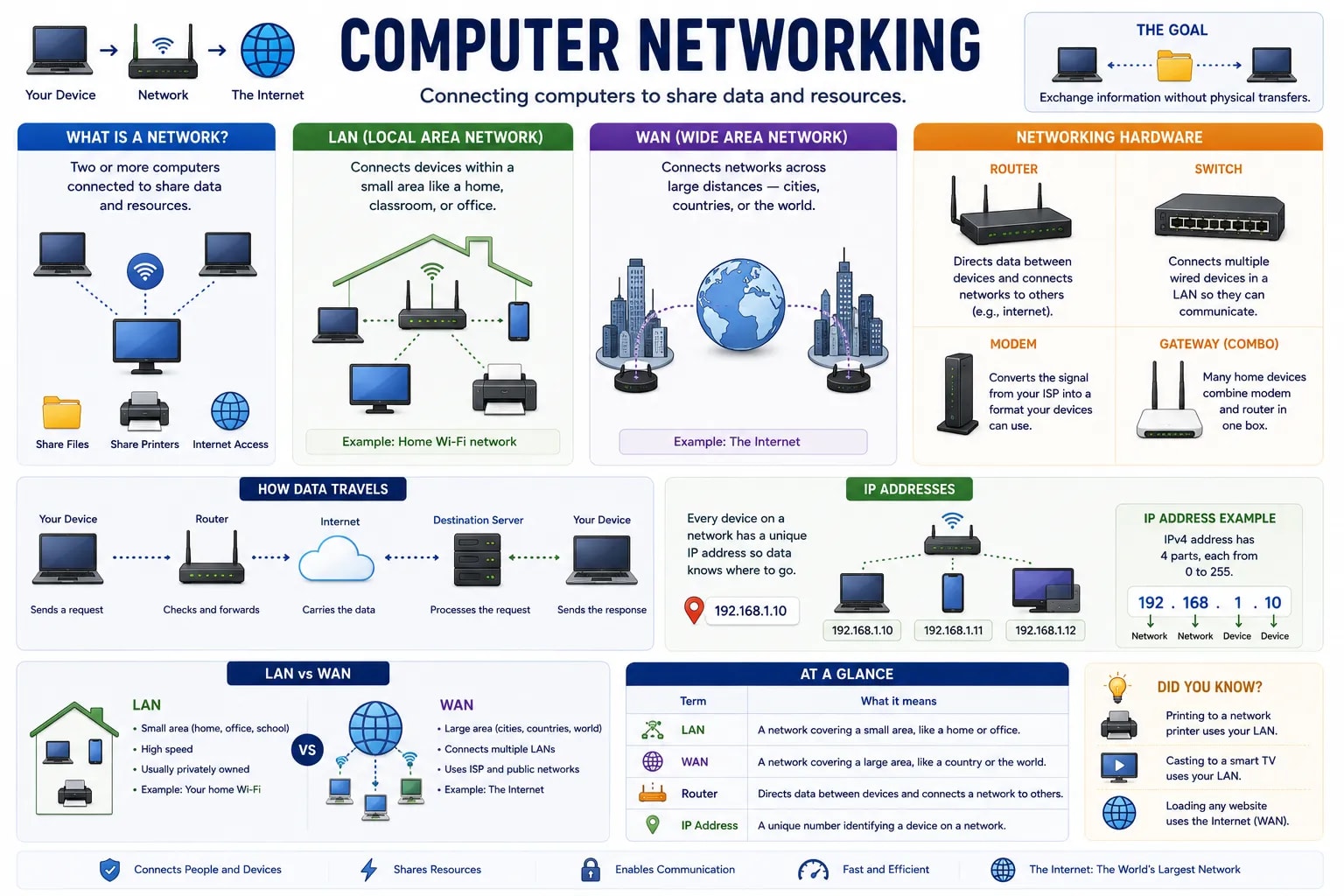
Every lesson so far has looked at a single computer. But most computers today rarely work alone — they are connected to other computers, sharing files, printers, and internet access. This lesson covers networking: how that connection actually works.
A network is simply two or more computers connected together so they can share data and resources. That connection can be a physical cable or a wireless radio signal like Wi-Fi, but either way, the goal is the same: let devices exchange information without a person manually carrying a file between them on a drive.
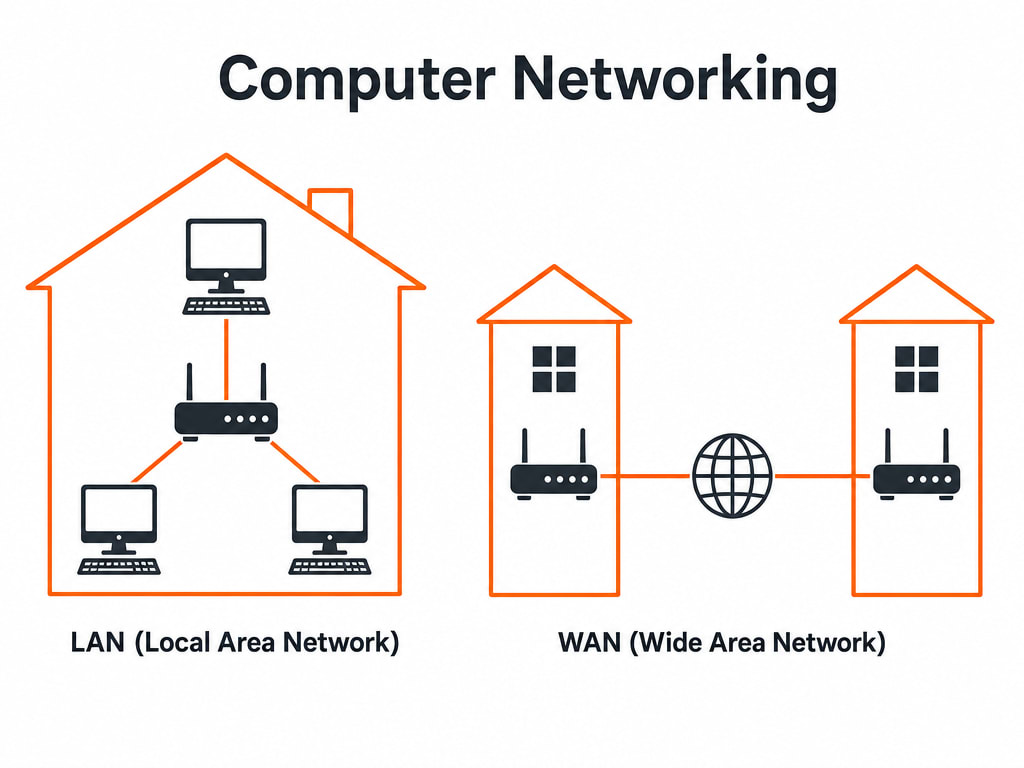
A LAN (Local Area Network) connects computers within a small, single physical area — a home, a classroom, or a single office building. Most home Wi-Fi setups are a LAN: your laptop, phone, and smart TV all connect to the same router, forming a small local network that also happens to share one internet connection.
A WAN (Wide Area Network) connects computers across a much larger area — a city, a country, or the entire planet — usually by linking many smaller LANs together. The internet, which you will look at in detail in the next lesson, is the largest WAN in existence: a network of networks spanning the whole world.
A router directs data between devices on a network and connects that network to others, such as the internet. A switch connects multiple wired devices within a single LAN, letting them talk to each other directly. A modem converts the signal from an internet service provider into a format your router and devices can use. In many home setups, a single device combines a modem and router into one box, which is why people sometimes use the two words interchangeably even though they do different jobs.
Every device on a network needs a unique address so data knows where to go — this is called an IP address (Internet Protocol address), a set of numbers that works much like a postal address for a device. When you load a webpage, your request travels across the network carrying the destination's IP address, and the response finds its way back to your device's own IP address.
| Term | What it means |
|---|---|
| LAN | A network covering a small area, like a home or office |
| WAN | A network covering a large area, like a country or the world |
| Router | Directs data between devices and connects a network to others |
| IP address | A unique number identifying a device on a network |
You Use This Every Day, Even If You Don’t See It
Networking can sound abstract, but you rely on it constantly without noticing: printing from a laptop to a shared office printer, casting a video from your phone to a smart TV, and loading any website all depend on the LAN and WAN concepts covered in this lesson.
Now that you understand how computers connect to each other in general, the next lesson zooms in on the largest network of all — the internet — and what actually happens when you visit a website.