

The same generative techniques covered earlier in this section — for images, video, and voice — can be misused. This lesson covers the three risks that matter most to know how to handle: deepfakes, privacy, and misinformation.
A deepfake is an AI-generated video, image, or audio clip where a real person appears to say or do something they never actually said or did — the name comes from "deep learning" plus "fake." A deepfake model is trained on many photos or videos of the target person, then maps their face or voice onto different footage, seamlessly replacing the original.
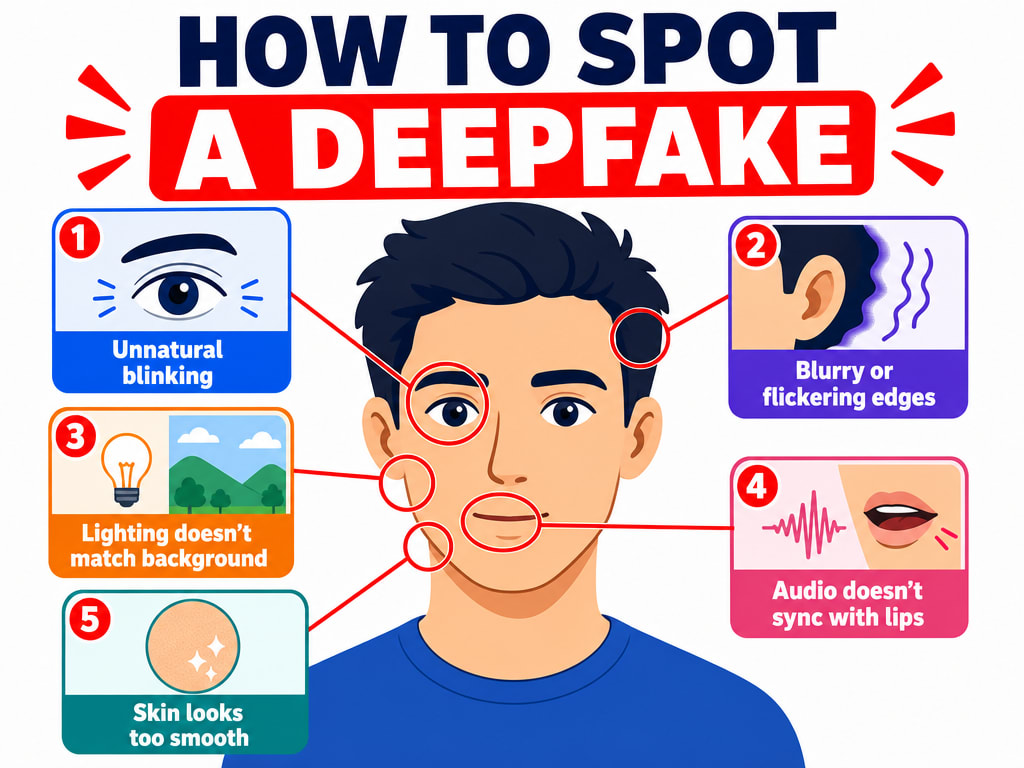
This Has Real Legal Consequences
In India, creating and sharing deepfakes with intent to harm is a punishable offence under the IT Act. Victims can file a report at the national cybercrime reporting portal, cybercrime.gov.in.
This is worth knowing honestly, without panic. A search engine you use daily typically has a record of every search you've made, videos watched, and sites visited while signed in. Social platforms track what you like, click, and who you're connected to, often inferring things like political or religious leaning from that activity alone. Messaging apps may not read encrypted message content, but still know who you talk to and when.
Practical steps that actually help:
AI has made writing a convincing but entirely fake news article, quote, or scientific claim trivially easy. A simple four-step habit catches most of it:
| Step | What to do |
|---|---|
| Stop | Before sharing, pause. Notice if the content is designed to make you feel a strong emotion — that's often a deliberate tactic to get you sharing before you think. |
| Investigate the source | Who actually published this? Is the site genuine — check the URL carefully, since fake sites often use a near-identical domain. |
| Find better coverage | Search for the same story from other reputable sources. If exactly one obscure site is reporting it, treat that as a red flag. |
| Trace the original | Right-click a suspicious image and search it — this often reveals the image is old, or from a completely different, unrelated event. |
Independent fact-checking organisations exist specifically to verify viral claims, and are worth checking before resharing anything that feels designed to provoke a strong reaction.
You now have practical tools for the risks side of AI. The final lesson in this section covers the responsibilities that fall specifically on people who build AI-powered products, not just those who use AI tools.