

The last lesson showed AI already at work across industries. This lesson is about what that means for you — the roles it's creating, and concrete steps toward earning from AI skills specifically.
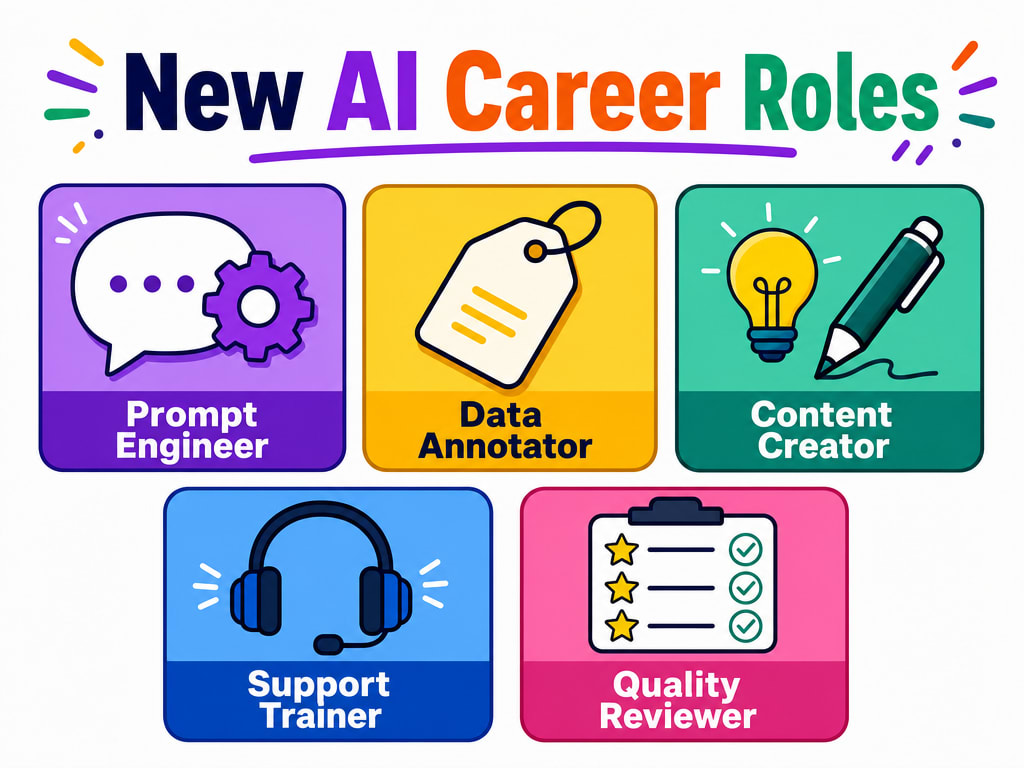
| Role | What it involves |
|---|---|
| AI prompt engineer | Writing and refining prompts for businesses that need consistent, high-quality AI output — often remote work for companies anywhere. |
| AI data annotator / labeler | Reviewing and labelling data used to train AI systems — flexible, remote, doesn't require deep technical background. |
| AI content creator | Using AI tools to produce blogs, social media content, and scripts for businesses — one of the more accessible freelance entry points. |
| AI customer support trainer | Writing sample responses and refining the behaviour of a company's AI-powered support chatbot. |
| AI output quality reviewer | Rating AI-generated responses for quality and safety — this kind of human feedback is literally what improves models over time, as covered in the LLM lesson. |
None of these require a computer science degree — they require genuine familiarity with the tools, which is exactly what this section has covered.
Work requiring physical presence (plumbers, electricians, cooks), genuine accountability (doctors, engineers signing off on safety), or real empathy (teachers, social workers, counsellors) remains firmly human — not because AI can't generate relevant text about these fields, but because the actual job isn't primarily about generating text.
Freelance platforms see steady demand for AI-related services built directly on skills covered in this section:
Write a 150-word professional freelancer bio for someone offering AI
chatbot setup, AI image generation, and AI content writing services.
Mention skills in [your specific skills]. Make it sound confident and
specific, not generic.
You now understand where AI creates real income opportunity. The final three lessons in this section cover using AI responsibly — starting with ethics and bias.