

A VPS (virtual private server) and a dedicated server both give you something shared hosting doesn't: full control over the server itself, not just a control panel sitting on top of it. The difference between the two is simply how much of the underlying hardware is actually yours.
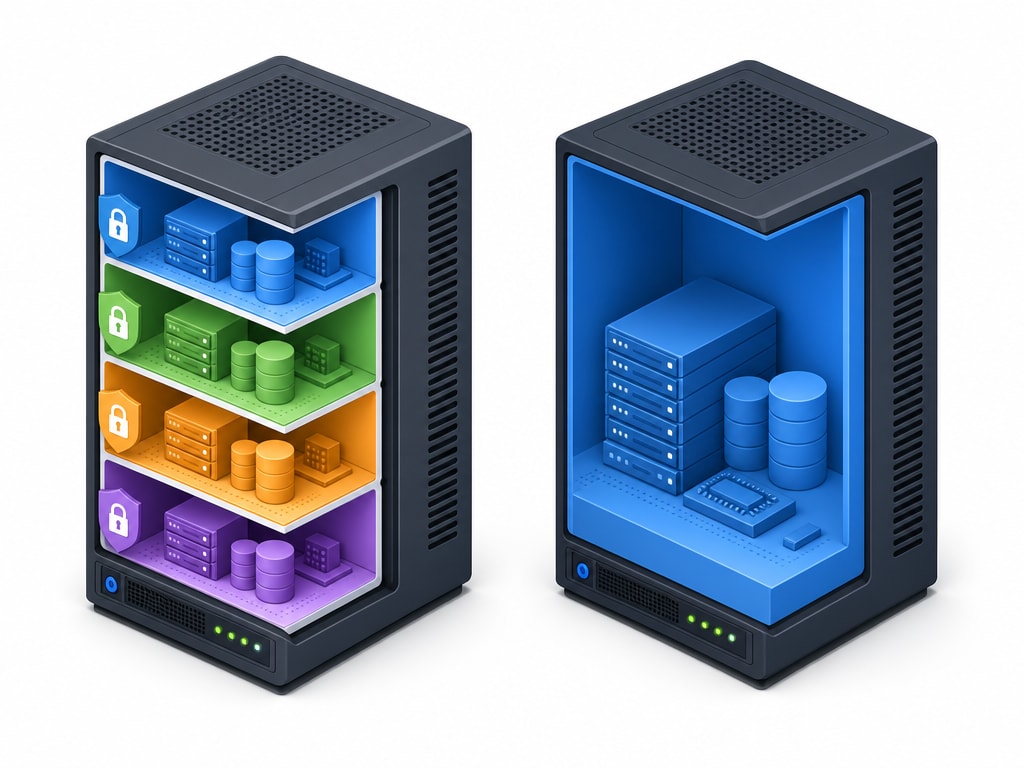
A VPS uses virtualisation to split one physical server into several independent virtual ones. Each VPS behaves like its own separate computer — it has its own operating system, its own resources, and no visibility into the other virtual servers sharing the same physical hardware — even though, underneath, it is still one machine divided up.
A dedicated server is exactly what it sounds like: one entire physical server, with nothing else running on it, entirely yours. It is the most resource and control a rented server can offer, and correspondingly the most expensive and least common choice for a student project.
With both, you get root access — the ability to install any software, configure the server however you want, and run things a shared-hosting control panel would never expose. That includes Node.js, custom database configurations, background processes, and anything else shared hosting typically blocks.
The trade is direct: full control means full responsibility. You are the one applying security updates, configuring a firewall, setting up backups, and diagnosing problems when something breaks — none of it handled invisibly the way it is on shared hosting.
An unmanaged VPS with no one applying security updates is a genuine security liability, not just an inconvenience — it can be compromised and used to send spam or attack other systems without you noticing for a long time. If you choose this route, plan for ongoing maintenance from day one, not as an afterthought.
Many providers offer a managed VPS option — you get full root access, but the provider handles security patching, monitoring, and baseline maintenance for an added cost. This narrows the gap with shared hosting's convenience while keeping most of a VPS's control and flexibility, and is often a sensible middle ground for someone past total beginner but not yet comfortable fully administering a server solo.
A VPS becomes worth it when a project outgrows shared hosting's limits, needs software shared hosting won't run (Node.js being the most common case for students on this site), or needs configuration control a shared control panel simply doesn't expose. For a first project, or a typical WordPress or PHP site with modest traffic, shared hosting is almost always still the better starting point — this is a step up to take once there is a concrete reason for it.