A phone typically holds emails, banking apps, photos, messages, and location history — arguably more sensitive data than most personal computers, while being far easier to lose, leave behind, or have physically stolen.
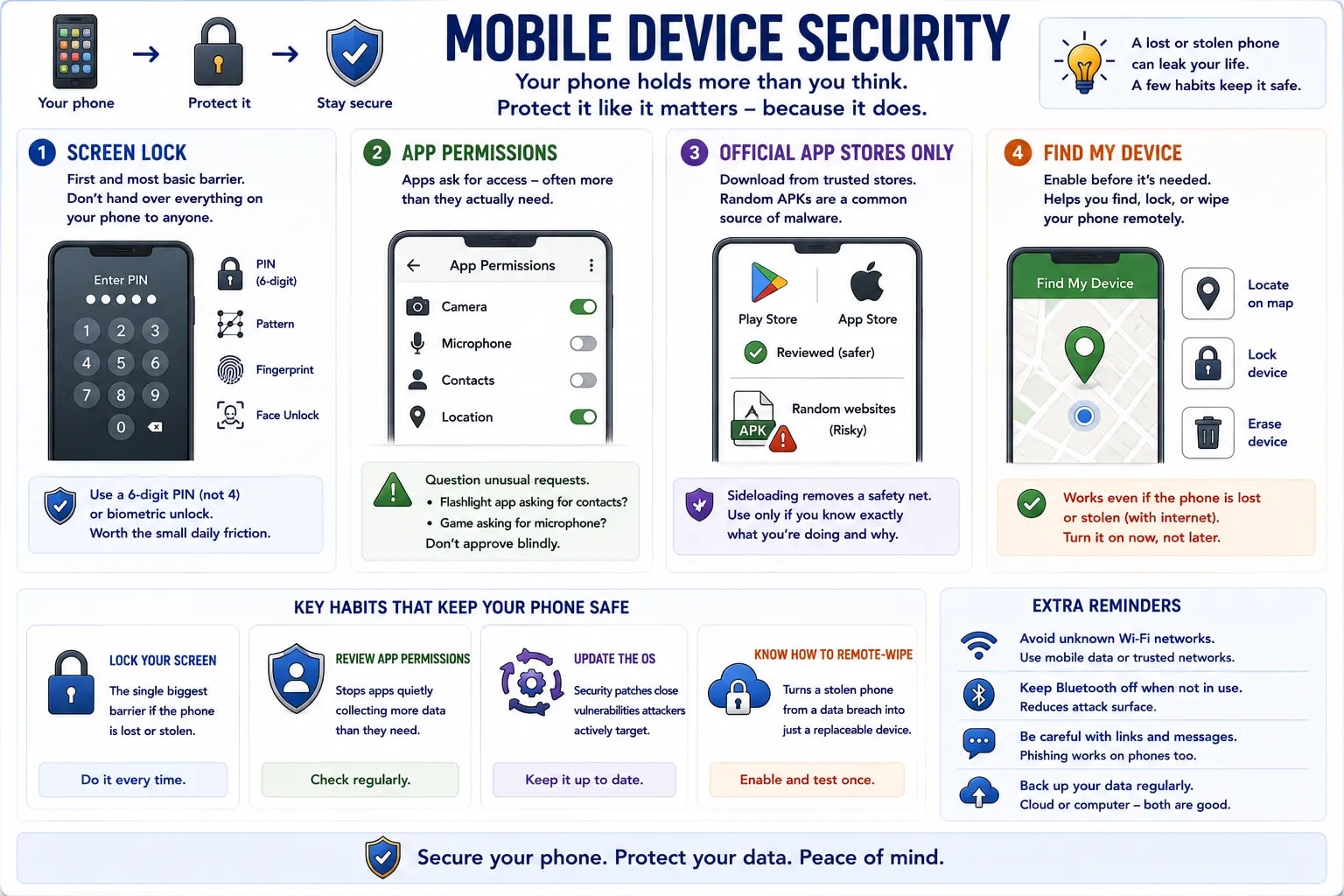
A PIN, pattern, fingerprint, or face unlock is the first and most basic barrier — a phone with no lock at all hands over everything on it to whoever picks it up. A 6-digit PIN (not 4) or biometric unlock is worth the small daily friction.
Apps request access to the camera, microphone, contacts, and location — often for reasons unrelated to their actual function. A flashlight app asking for contacts access, or a game asking for microphone access, is worth questioning rather than reflexively approving.
Apps from the Play Store or App Store go through at least some review before publishing; a downloaded APK file from a random website skips that entirely and is one of the more common ways mobile malware actually spreads. "Sideloading" isn't inherently unsafe for an experienced user with a specific reason, but it removes a real safety net for everyone else.
Both major platforms offer a built-in "Find My Device" / "Find My iPhone" feature — worth enabling before it's needed, not after. It shows a lost or stolen phone's location on a map and allows remote locking or wiping if recovery isn't possible.
| Habit | Why it matters |
|---|---|
| Lock your screen | The single biggest barrier if the phone is lost or stolen |
| Review app permissions | Stops apps quietly collecting more than they need |
| Update the OS | Security patches close vulnerabilities attackers actively target |
| Know how to remote-wipe | Turns a stolen phone from a data breach into just a replaceable device |