

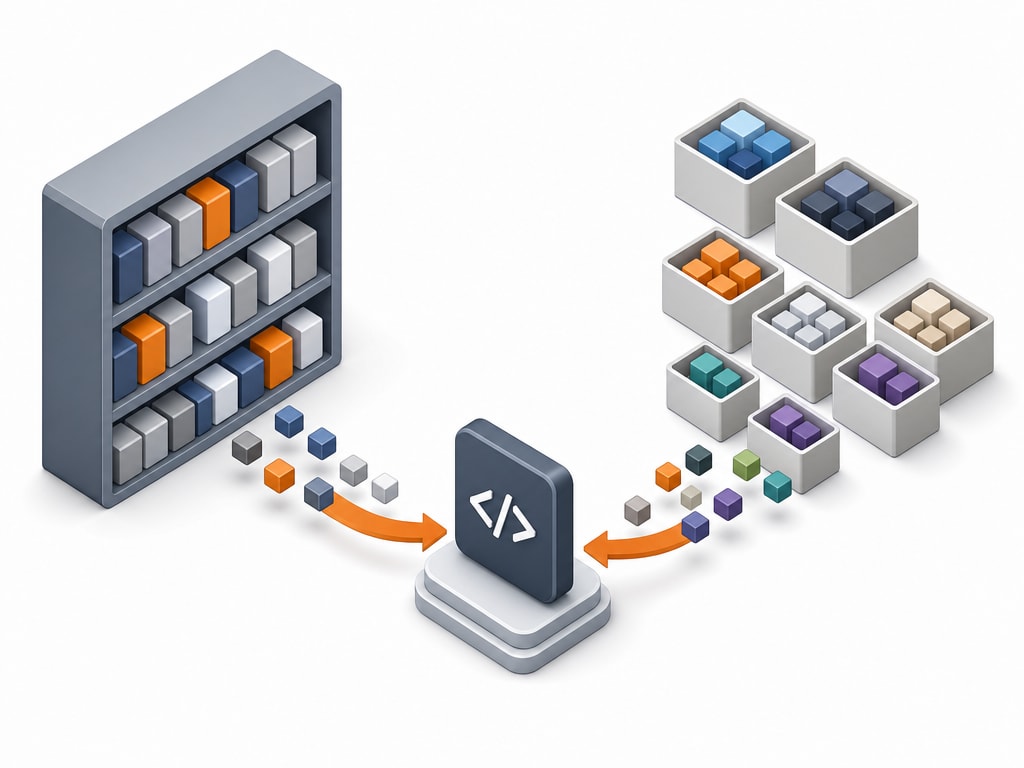
A huge part of Python's practical usefulness comes from code you don't have to write yourself — the standard library ships with Python itself, and pip installs anything else from the wider Python community.
You already used this with the math module. import makes a whole module available; from ... import ... pulls out just what you need:
import math
print(math.sqrt(64))

from math import sqrt
print(sqrt(64))  # same result, no math. prefix needed
The standard library is large and covers a lot of everyday needs — random (random numbers), datetime (dates, covered in its own lesson soon), json (reading/writing JSON), os (interacting with the operating system), among many others. The full standard library reference is on python.org.
as renames an import — useful for a long module name you'll type repeatedly. It's so standard for a few libraries that the alias is effectively part of how everyone writes them:
import math as m
print(m.sqrt(64))  # 8.0 — same module, shorter name

# You'll see these exact aliases constantly once you reach data/AI libraries:
# import pandas as pd
# import numpy as npAnything not in the standard library — a web framework, a data analysis library, an HTTP client — is installed with pip, Python's package manager, roughly equivalent to what npm is for JavaScript:
pip install requestsimport requests
response = requests.get("https://api.example.com/data")
print(response.status_code)Any .py file can be imported by another — this is how Python code gets split across multiple files instead of living in one giant script:
# helpers.py
def greet(name):
    return f"Hello, {name}!"
# main.py
from helpers import greet
print(greet("Priya"))Virtual environments come later
Real Python projects almost always use a virtual environment to keep each project's installed packages separate from every other project's — covered properly in the "Where to Go Next" lesson at the end of this section, since it's more of a workflow habit than a language feature.