

Almost all digital advertising is sold by auction, and almost everyone assumes those auctions work by highest bid wins. They do not — and understanding why is the single most useful piece of knowledge in paid advertising.
When someone performs a search, or a slot opens in a feed, an auction happens in the moment. Every advertiser eligible for that person and that placement is entered, the platform ranks them, and one is shown. This happens billions of times a day, entirely automatically.
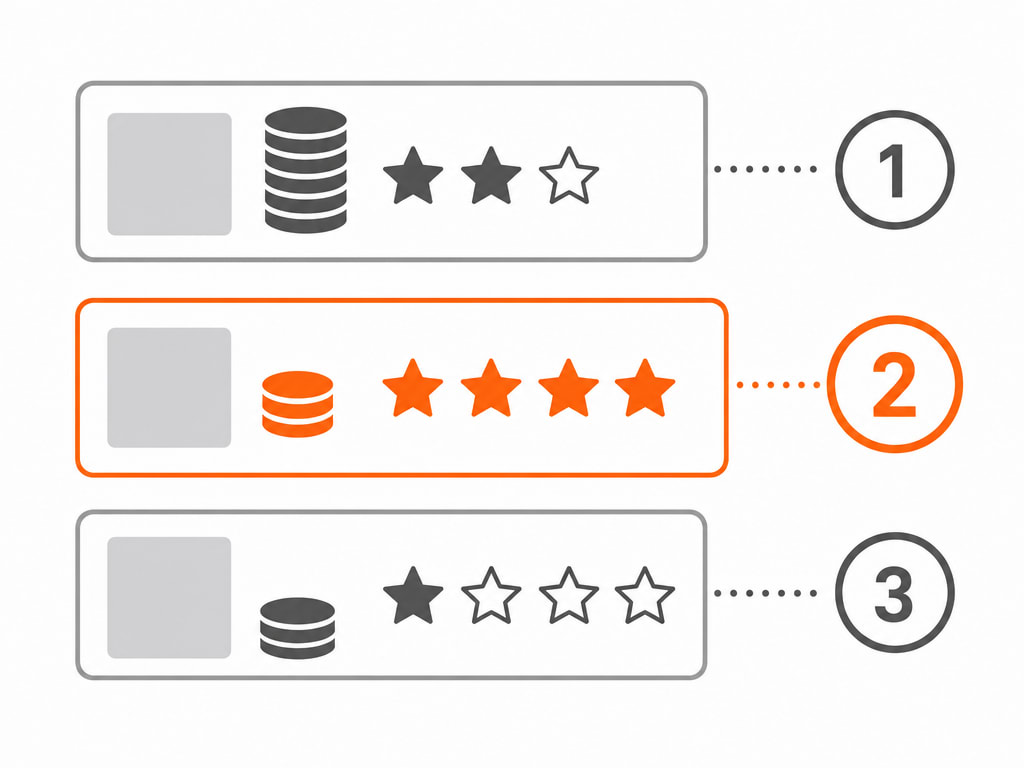
Platforms combine your bid with an assessment of quality and relevance — how likely the ad is to be useful to this specific person. The exact formulas differ by platform and are not published, but the principle is consistent across all of them.
The reason is straightforward commercial self-interest. A platform showing irrelevant ads earns money once and loses users. A platform showing ads people find useful can keep doing it. So relevance is rewarded, and it is rewarded in two ways: relevant ads win auctions they would lose on bid alone, and they typically cost less per click.
The practical implication
This is why "just outbid them" is not a strategy. An advertiser with a well-matched ad, a relevant landing page, and a clear audience can pay less per click than a competitor bidding more with a generic ad. Improving relevance is usually cheaper than raising bids, and it is the lever most people ignore.
In most auction systems you do not pay your full bid — you pay the minimum needed to hold your position against the next advertiser. Your bid sets a ceiling, not a price.
| Model | You pay when | Suits |
|---|---|---|
| CPC — cost per click | Someone clicks the ad | Driving traffic; you pay only for interest |
| CPM — cost per thousand impressions | The ad is shown, clicked or not | Awareness, where being seen is the point |
| CPA — cost per acquisition | A defined action completes | Conversions; requires tracking to be set up correctly |
| CPV — cost per view | Someone watches a defined portion of a video | Video campaigns |
The right model follows from the goal. Paying per impression for a campaign meant to generate enquiries means paying for people who never engaged; paying per click for a pure awareness campaign undercounts the value of being seen.
There is no standard price for a click. What you pay depends on how many advertisers want the same audience, how valuable that audience is commercially, the season, the location, and your own relevance.
This is why quoted average costs are close to meaningless — a click in a competitive commercial field and a click in a niche one can differ by an order of magnitude. Your own data, after a small test, is the only figure that describes your situation.